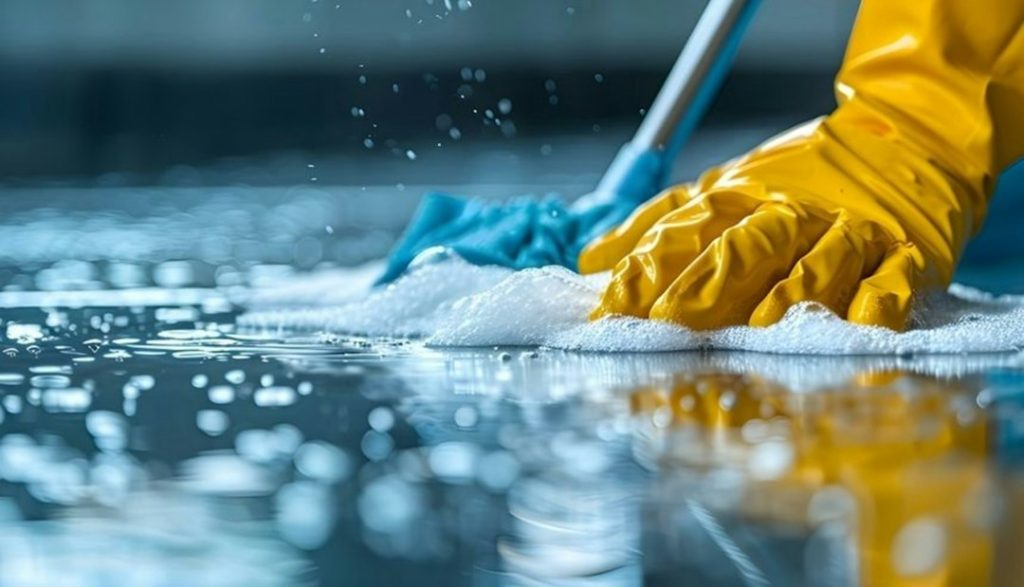
The relentless battle against grime often centers on the most overlooked areas: baseboards. These architectural boundaries, constantly accumulating dust, pet hair, and scuff marks, demand specialized cleaning attention. However, the effectiveness of your baseboard cleaning routine hinges critically on the tools you employ. Two popular contenders, the spin mop and the flat squeeze mop, offer distinct approaches, particularly concerning their ability to manage dirty water. This deep dive scrutinizes their performance specifically for baseboard cleaning, with a keen eye on their dirty water separation capabilities, to determine which reigns supreme in 2026.
The Core Mop Debate: Spin vs. Flat Squeeze for Baseboards
Choosing the right mop for baseboards isn’t just about removing surface dirt; it’s about a nuanced cleaning process that addresses tight spaces, stubborn marks, and, crucially, the hygiene of the cleaning solution itself. Spin mops, with their rotating heads and specialized buckets, promise efficiency and a cleaner experience. Flat squeeze mops, on the other hand, leverage a more traditional design, focusing on manual control and effective wringing. Understanding their fundamental mechanisms is key to appreciating their differential performance on vertical surfaces like baseboards.
Understanding the Spin Mop Mechanism for Tight Spaces
The hallmark of a spin mop is its bucket system, which typically features a spinner basket driven by a foot pedal or a handle mechanism. This action centrifugally forces water out of the mop head, theoretically leaving it damp rather than saturated. For baseboards, this controlled dampness is beneficial, reducing the risk of water damage to walls and flooring. The mop head itself, often circular and made of microfiber, can pivot and angle, allowing it to conform to the edges and corners of baseboards. However, the bulk of the mop head and the bucket mechanism can sometimes be cumbersome in extremely confined areas or around complex baseboard moldings.

How Flat Squeeze Mops Handle Edges and Corners
Flat squeeze mops, characterized by their rectangular, low-profile heads, excel at reaching under furniture and into tight corners. Their design often allows for a more direct application of pressure, which can be advantageous for scrubbing scuff marks off baseboards. The wringing mechanism, typically integrated into the bucket or a separate handle component, relies on manual force to compress the mop pad and expel dirty water. This manual control offers a tactile feedback loop, allowing users to achieve a desired level of dampness. The flat head can also effectively skim along the length of a baseboard, covering significant ground efficiently.
Dirty Water Separation: A Game Changer for Baseboard Grime
The efficacy of any mopping task is severely undermined if you’re merely spreading dirty water around. This is particularly true for baseboards, which often collect the dirtiest accumulation from floors. Effective dirty water separation means the mop head is consistently rinsed and wrung out with cleaner water, leading to a more hygienic and effective clean. This is where the design philosophies of spin and flat squeeze mops diverge most significantly.
Spin Mop’s Dirty Water System: Effectiveness and Limitations
Spin mops are often marketed for their superior dirty water management. The centrifugal spinning action in the bucket is designed to fling dirty water into the lower, dirtier chamber of the bucket, leaving the upper chamber with relatively cleaner water for rinsing. In practice, this system works reasonably well for general floor cleaning. However, when tackling vertical baseboards, the effectiveness of this separation can be compromised. Repeatedly dipping and spinning a mop head that has just scrubbed a grime-laden baseboard can still introduce significant soil into the clean water reservoir if the spinning isn’t exceptionally powerful or if the mop head isn’t fully submerged and agitated correctly within the rinse cycle. Some high-end models offer dual-chamber buckets specifically to enhance separation, but the fundamental challenge of a relatively large, absorbent mop head remains.
Flat Squeeze Mop’s Wringing Action: How it Tackles Dirty Water
Flat squeeze mops rely on manual wringing, which, while requiring more effort, offers a high degree of control. The quality of dirty water management here depends heavily on the user’s diligence and the specific wringing mechanism. A well-designed squeeze mechanism can expel a substantial amount of dirty water, leaving the mop pad relatively dry and ready for another pass. The limitation is that this is a manual process; the water expelled goes directly back into the bucket, mingling with the remaining solution. To achieve a cleaner rinse, users must frequently empty and refill the bucket, a task often neglected during baseboard cleaning due to its awkward positioning and the perceived effort involved.

Comparing Dirty Water Separation: Which Keeps Your Water Cleanest?
In a direct comparison for baseboard cleaning, the spin mop, with its automated separation, generally maintains a cleaner rinse water for longer periods than a flat squeeze mop without frequent bucket changes. The centrifugal force effectively removes more loose debris and water from the mop head. However, the initial saturation of the mop head from scrubbing baseboards can quickly contaminate the clean water reservoir if not properly rinsed before spinning. Flat squeeze mops require more user intervention (frequent emptying/refilling) to achieve comparable water cleanliness but offer precise control over the mop’s dampness, which can be crucial for preventing water streaks on walls.
Baseboard Cleaning Performance: Real-World Scenarios
Beyond the mechanics of water management, the practical performance on baseboards is paramount. This includes tackling ingrained dirt, navigating various heights and obstacles, and preserving the integrity of your walls and floors.
Tackling Stubborn Grime: Spin Mop’s Power vs. Flat Squeeze Mop’s Precision
For caked-on mud or scuff marks, the spin mop’s absorbent microfiber head can be effective, especially when saturated and used with a cleaning solution. The spinning action can help agitate the grime. However, its larger head size might make precise scrubbing on a narrow baseboard challenging. The flat squeeze mop, with its slimmer profile and the ability to apply direct downward pressure, often has an edge in targeted scrubbing. Users can maneuver the flat head precisely along the baseboard’s edge, applying focused force to lift stubborn dirt without excessive collateral dampness on the wall above.
Reaching High and Low Baseboards: Maneuverability Matters
Baseboards vary in height, from low profiles near the floor to taller, more elaborate designs. Spin mops, while generally maneuverable, can sometimes feel top-heavy or unwieldy when reaching high baseboards at an awkward angle. The bucket often needs to be positioned inconveniently. Flat squeeze mops, with their lighter weight and often telescoping handles, tend to offer superior flexibility for reaching both low-to-the-ground areas (where the low profile is an advantage) and higher sections of baseboards. Their simpler construction often makes them easier to control at various angles.

Preventing Scratches and Damage: Material and Design Considerations
The material of the mop head and the design of the mop base are critical for preventing scratches on painted baseboards or scuffs on adjacent flooring. Microfiber heads, common on both types of mops, are generally safe. However, any exposed plastic or metal components on the mop head’s frame could potentially cause damage. Spin mops often have a plastic or metal base that houses the spinner, which needs to be designed to avoid contact with the wall. Flat squeeze mops, with their simpler, often all-plastic or rubber-edged heads, might offer a slight advantage in minimizing accidental scratches, especially models with soft edge guards.
| Feature | Spin Mop (Typical) | Flat Squeeze Mop (Typical) |
|---|---|---|
| Mop Head Shape | Circular / 360-degree | Rectangular / Flat |
| Dirty Water Separation | Automated centrifugal spinning (variable effectiveness) | Manual wringing (user-dependent, requires frequent bucket changes) |
| Water Control / Dampness | Good, adjustable via spin speed | Excellent, highly controllable via manual squeeze |
| Maneuverability (High Baseboards) | Moderate (can be cumbersome) | Excellent (lighter, longer reach) |
| Maneuverability (Tight Corners) | Good (pivoting head) | Excellent (low profile, precise angle) |
| Scrubbing Power (Targeted) | Moderate | High (direct pressure) |
| Weight (Mop Head Assembly) | Moderate to Heavy | Light to Moderate |
| Bucket Design Complexity | High (includes spinner) | Low to Moderate (may include wringer) |
| Potential for Wall Damage | Low (if used carefully) | Very Low (if designed well) |
| Price Range (USD) | $30 – $70 | $20 – $50 |
Ease of Use and Maintenance
Beyond cleaning efficacy, the user experience – from setup to long-term care – significantly influences a tool’s practical value. How intuitive are these mops to assemble, operate, and maintain, especially for the specific task of baseboard cleaning?
Spin Mop: Assembly, Bucket Handling, and Spin Mechanism Durability
Spin mops typically require minimal assembly, usually just attaching the mop head to the handle. The primary interaction involves managing the bucket. Filling it, positioning it correctly for spinning, and emptying the dirty water can be cumbersome, especially when leaning down to clean baseboards. The spin mechanism itself, often plastic, can be a point of failure over time, with frequent use potentially leading to wear. Durability varies greatly by brand and model, with higher-end units featuring more robust components.
Flat Squeeze Mop: Wringing Effort, Pad Swapping, and Bucket Design
Flat squeeze mops are generally very simple to use. Their pads are often attached via Velcro or a simple sleeve system, making them easy to swap or remove for washing. The main effort lies in the wringing process, which can be physically demanding depending on the stiffness of the pad and the efficiency of the wringer. Bucket designs are usually straightforward, prioritizing stability and ease of filling/emptying. Some integrated systems combine the wringer and bucket efficiently, reducing the awkwardness compared to older, separate wringer buckets.
Longevity and Cost of Ownership: Spin vs. Flat Squeeze Mops
In terms of initial cost, flat squeeze mops are typically more affordable than spin mop systems. Replacement mop heads for both are readily available and generally inexpensive. The longevity aspect introduces more variables. The mechanical complexity of a spin mop’s bucket (the spinner) can be a weak point, potentially leading to earlier failure than the simpler mechanisms of a flat squeeze mop. However, a well-built spin mop with a durable spinner mechanism could outlast a cheaply made flat squeeze mop. The ongoing cost for both primarily involves replacing mop heads, which are consumables.
Expert Verdict: Which Mop Wins for Baseboard Cleaning with Dirty Water Separation?
The nuanced demands of baseboard cleaning, particularly the need for controlled dampness and effective grime management, present a challenge for both mop types. However, when weighing performance, maneuverability, and hygiene, one type edges out the other.

Spin Mop – Pros & Cons
Pros:
- Good dirty water separation for general use.
- Absorbent microfiber head effective for larger dirt particles.
- Adjustable dampness via spin control.
Cons:
- Can be bulky and difficult to maneuver in tight spaces or high areas.
- Spinner mechanism can be a point of failure.
- Less precise scrubbing capability on narrow baseboards.
- Potential for water contamination if mop head is heavily soiled before rinsing.
Flat Squeeze Mop – Pros & Cons
Pros:
- Excellent maneuverability for high, low, and tight corners.
- Precise control over dampness and pressure for targeted scrubbing.
- Lighter weight and simpler design.
- Lower initial cost.
Cons:
- Dirty water management relies heavily on user diligence (frequent bucket changes needed).
- Wringing can require significant physical effort.
- Less effective at absorbing large amounts of loose debris compared to a saturated spin mop.
Top Spin Mop Picks for Baseboard Duty (2026)
For those prioritizing automated dirty water separation and a generally cleaner rinse cycle, models like the O-Cedar EasyWring Microfiber Spin Mop offer a balance of performance and value. Its triangular mop head design aids slightly in corner cleaning, and the foot pedal offers effective spinning. However, users must be mindful of rinsing the head thoroughly before spinning to maximize water cleanliness. The V-Mop System from Vileda, often featuring a more robust dual-bucket system, also warrants consideration for its enhanced dirty water segregation, though it comes at a higher price point.
Leading Flat Squeeze Mops for Edges and Corners (2026)
In the realm of flat squeeze mops, the Swiffer WetJet Floor Cleaner Spray Mop (while not strictly a ‘squeeze’ mop, its pad-based system and low profile function similarly for baseboards) offers unparalleled ease of use for quick touch-ups. For more thorough cleaning, the Casabella Infuse Smart Clean Water Spray Mop allows for integrated cleaning solution, offering convenience. However, for pure scrubbing efficacy and precise control on baseboards, models like the Mr. Clean Ultra-Grip Heavy Duty Mop with its sturdy handle and effective wringing mechanism are top contenders. Their low profile and flat heads allow for excellent access and targeted cleaning.
FAQ: Answering Your Baseboard Mop Questions
Q1: Can a spin mop effectively clean baseboards without scratching them?
A: Yes, most spin mop heads are made of soft microfiber, which is non-abrasive. However, always ensure the mop head is clean and free of any grit before use, and be mindful of any hard plastic or metal parts on the mop’s base that could contact the wall.
Q2: How often should I change the water when using a flat squeeze mop for baseboards?
A: For optimal cleaning and hygiene, especially with heavily soiled baseboards, it’s recommended to change the water every 10-15 minutes of cleaning time, or whenever the water becomes visibly dirty. This is more frequent than typically needed for floor mopping.
Q3: Which mop type is better for hardwood baseboards?
A: For hardwood baseboards, controlled dampness is crucial to prevent water damage. Both mops can work, but the flat squeeze mop offers superior control over how wet the mop head becomes, making it slightly safer for hardwood. Always ensure the mop is only slightly damp, never wet.
Q4: Do spin mops truly separate dirty water effectively for baseboard cleaning?
A: While spin mops offer automated separation, heavily soiled baseboards can quickly overwhelm the system. The centrifugal force is effective at removing excess water and some dirt, but deep-seated grime on the mop head might not be fully expelled, potentially reintroducing some dirtiness into the rinse water compared to a meticulously maintained flat mop system.
Q5: Are there any spin mop models specifically designed for vertical cleaning like baseboards?
A: While no spin mop is exclusively designed for baseboards, models with highly flexible or pivoting heads, lighter overall weight, and effective dual-chamber buckets (for better water separation) perform better. The O-Cedar ProForce or certain Vileda models often get positive mentions for their design adaptability.
👑 Ultimate Winner: Flat Squeeze Mop
For the specific task of baseboard cleaning, particularly when considering dirty water separation and overall performance, the Flat Squeeze Mop emerges as the superior choice in 2026. Its key advantages lie in its low-profile design, enabling superior access to baseboards near floors and in tight corners. The ability to apply precise, direct pressure allows for more effective scrubbing of stubborn grime and scuffs. Crucially, while its dirty water separation relies on manual effort, the user has absolute control over the mop’s dampness, significantly reducing the risk of water damage to walls – a critical factor often overlooked. Although spin mops offer automated separation, their bulkier design and less precise head control make them less ideal for the vertical, detailed work required for baseboards. The manual effort in wringing a flat mop is a trade-off for enhanced control and reduced risk, making it the preferred tool for homeowners prioritizing a meticulous and safe baseboard clean.